Stains, loose shingles and wind damage in Lyndhurst
Roof Repair in Lyndhurst, NJ
Roof repair in Lyndhurst, NJ usually starts small: a brown stain that spreads across the ceiling after rain, a shingle lying in the yard, or a corner that lifted in the wind. Call (551) 209-3947 and say where the water first showed itself, and a local roofer can arrange a visit to look at the roof itself.
Looks from the ground
Each of these looks is made from the ground or at a window. A ladder, a wet slope or a steep pitch belongs to the roofer.
- Binoculars from the sidewalk or the yard are enough to check the ridge and the eaves for shingles that have curled, cracked or gone missing. Nobody needs to climb for this.
- Trace a ceiling stain in pencil and date the line. Once the next rain has come and gone, the stain either stays inside the outline or has grown past it.
- Check the ground where each downspout ends for a small drift of dark grit. Aging shingles shed it, and the gutter carries it down.
- Through the attic hatch, aim a flashlight up at the wood under the roof. Dark trails or damp insulation tell the roofer where the water found its way in.
Leave it and make the safety call if
- A wire has fallen in the yard or hangs low by the house: consider it energized, stay well back, and hand it to 911 or the PSE&G emergency line, 1-800-436-7734.
- Water drips from a ceiling light or collects around an outlet: empty the room, and call 911 at a spark or a whiff of burning.
- A ceiling sags into a belly of water: nobody stands or sleeps under it, and if the plaster looks about to let go, dial 911.
- The roof is slick, frosted or steep: no one goes up to look. 911 is for a person who has already fallen; the climbing belongs to a roofer.
A ceiling stain, scored from one to ten
- 8 to 10
a wire lies in the yard, a ceiling sags with water, or water is dripping from a light. Move away first and use the safety lines above. Once everyone is clear, call (551) 209-3947 about the roof.
- 4 to 7
the stain grows with each rain, or shingles are missing from a slope that takes the weather. Photograph what you can see from the ground, then call (551) 209-3947 within the week.
- 1 to 3
one curled shingle over a dry ceiling. Make the checks above, write down the date, and call if the pencil outline moves.
Three questions about this job
Is one damaged shingle a reason to replace the roof?
What record of a ceiling stain helps with an insurance claim?
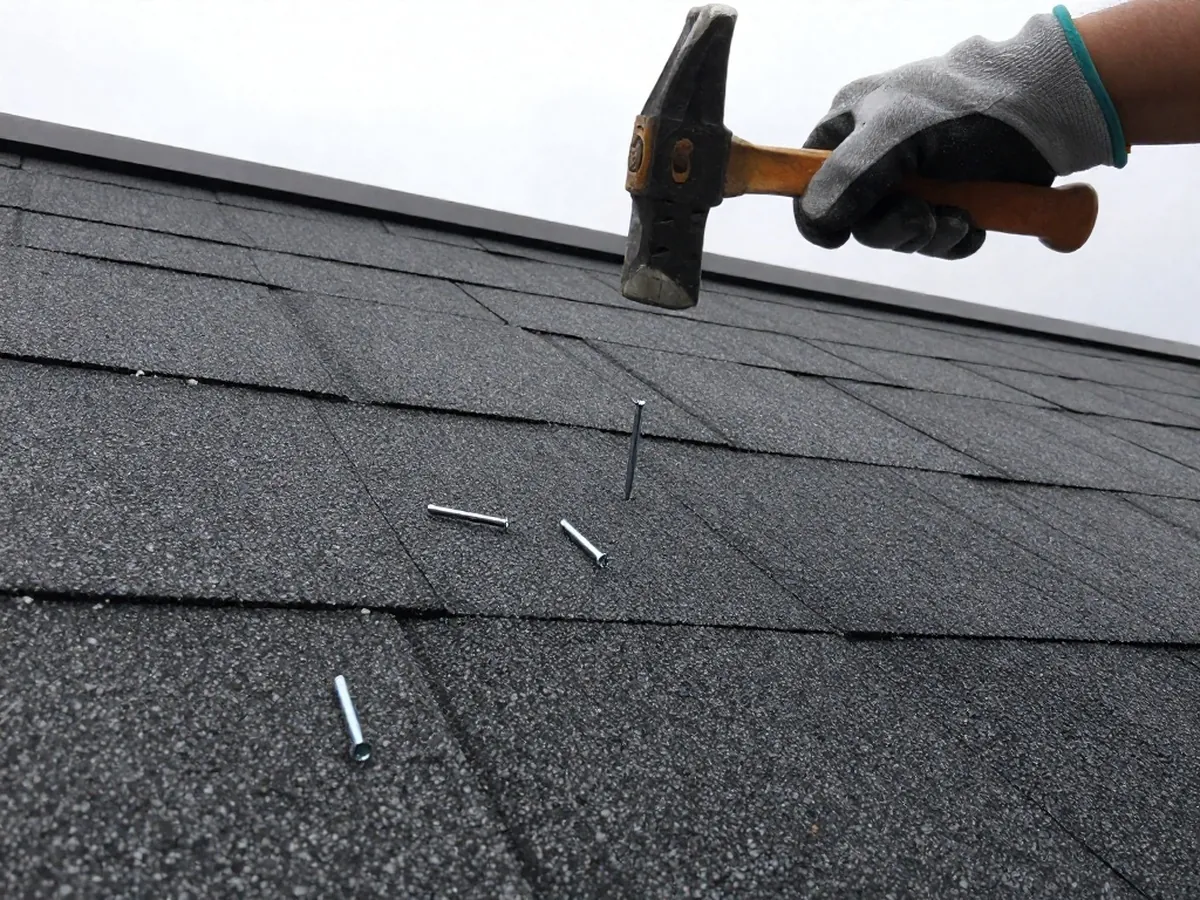
Do nails matter on a shingle repair?
Signs this is the job
- A ceiling stain, brown or yellowish, that creeps wider after rain
- A shingle, or a piece of one, lying in the yard after wind
- Shingle corners curled up, or tabs that no longer lie flat
- Dark streaks on the wood under the roof, glimpsed through the attic hatch
- Damp insulation, or a musty odor in the closet under the roof
One slope or the whole roof?
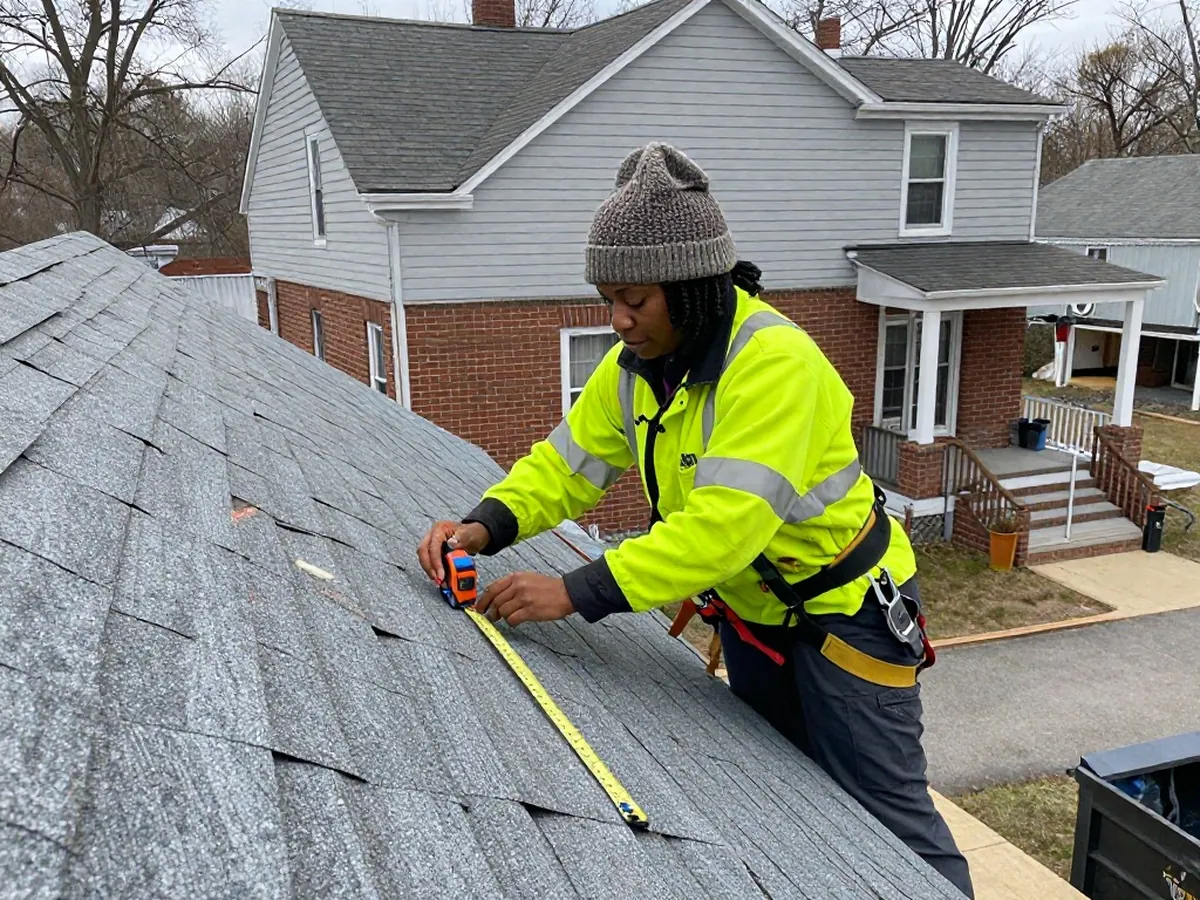
The Energy Department's 2006 roof brief reports a builders' yardstick: replacement becomes the recommendation once the share needing repair climbs past a tenth of the roof. It was written about Gulf Coast homes after hurricanes, so it opens a conversation with a roofer without settling one. A cracked shingle or two on a roof that is otherwise flat and tight sits on the repair side.
Leaks on several slopes, shingles that crumble when lifted, and fresh repairs needed every season point the other way, toward roof replacement.
Other jobs on the list
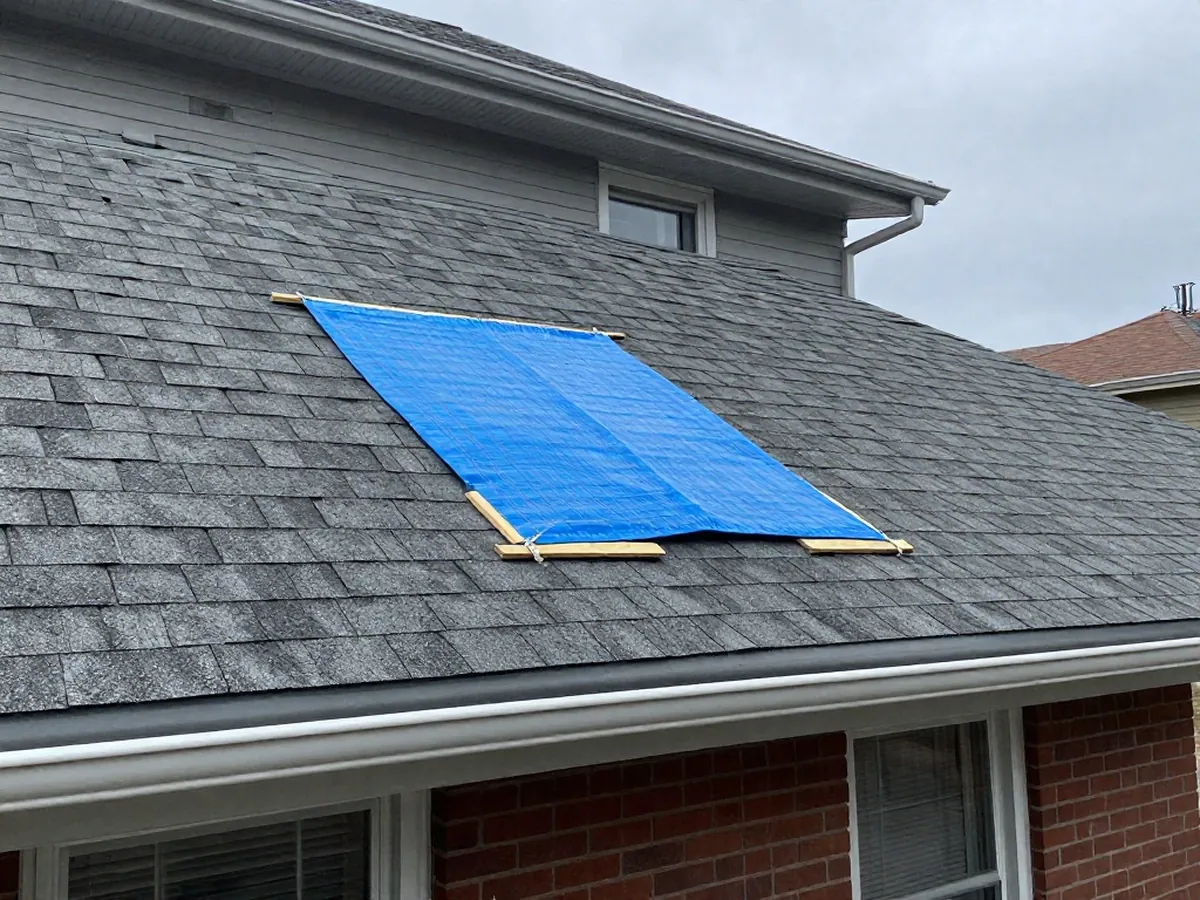
Wind, falling limbs and downpours near Lyndhurst
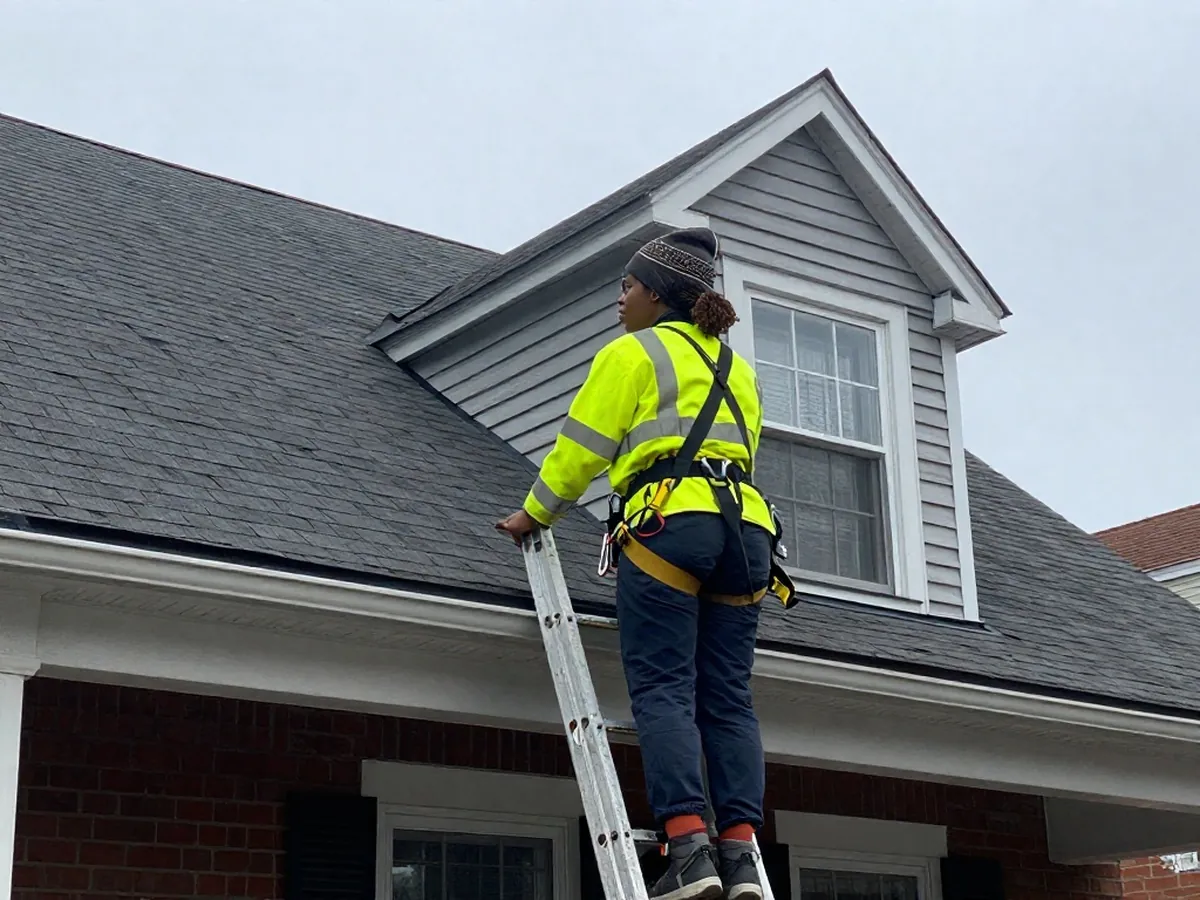
A closer look at the roof, from the ground up
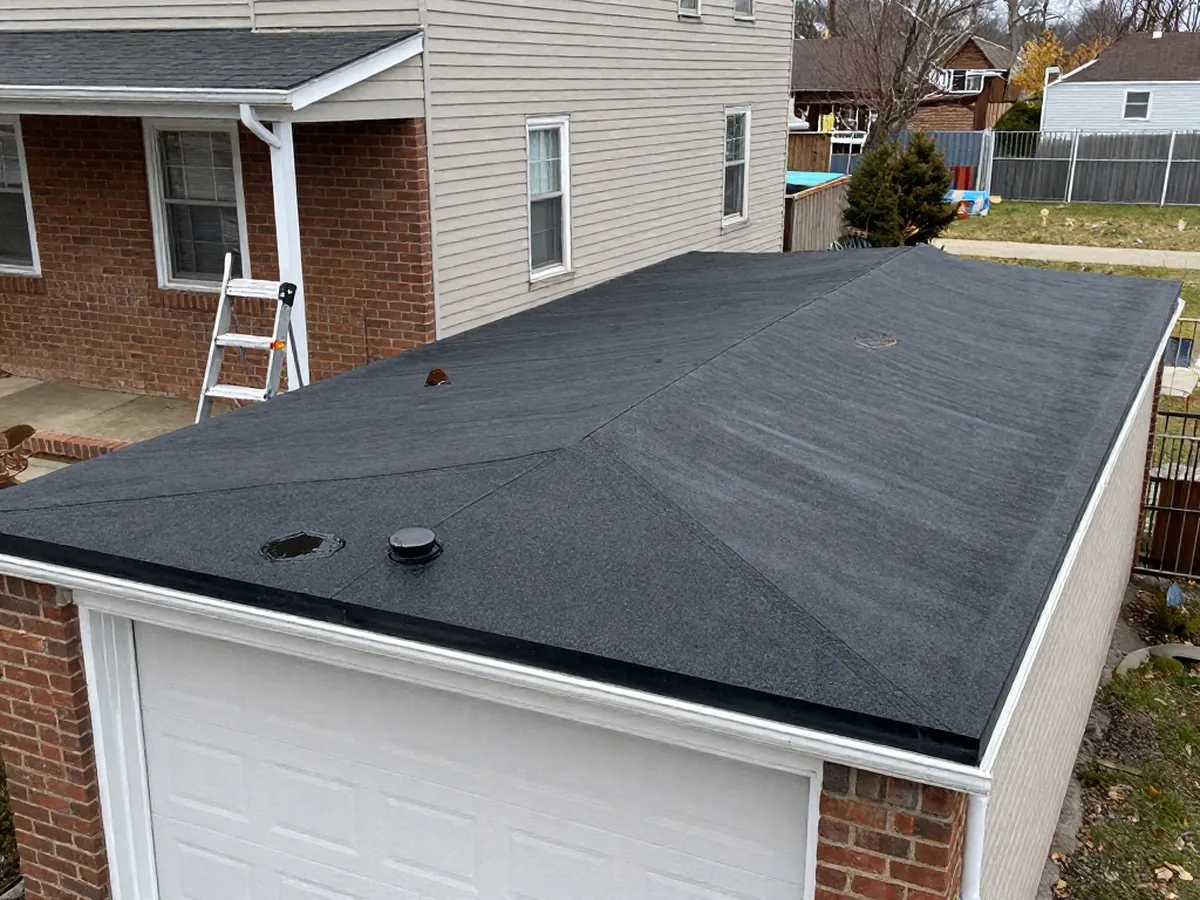
Garages, porches and rear additions with a low-slope top
From
- U.S. Department of Energy, Repairing Roofs and Ceilings technical brief (Jan 2006)
- FEMA, Home Builder's Guide to Coastal Construction, Technical Fact Sheet No. 7.3, Asphalt Shingle Roofing for High-Wind Regions
- Asphalt Roofing Manufacturers Association, Assessing roof damage after Superstorm Sandy (7 Nov 2012)
- NJ Department of Banking and Insurance, Guidance on filing insurance claims for storm-related damage
- PSE&G, Downed Power Line Safety
- NJ Department of Community Affairs, Significant changes to minor work and ordinary maintenance (alert, 5 Mar 2018)
- Township of Lyndhurst Code, Chapter 8, Building and Housing (eCode360)
Checked 1 Nov 2026