Wind, falling limbs and downpours near Lyndhurst
Storm Damage Roof Repair in Lyndhurst, NJ
Storm damage to a Lyndhurst roof shows up as shingles in the yard, a limb across a slope, or water where none came in before. Call (551) 209-3947 once everyone is clear of wires and wet ceilings, and a local roofer can arrange a visit to look at the roof.
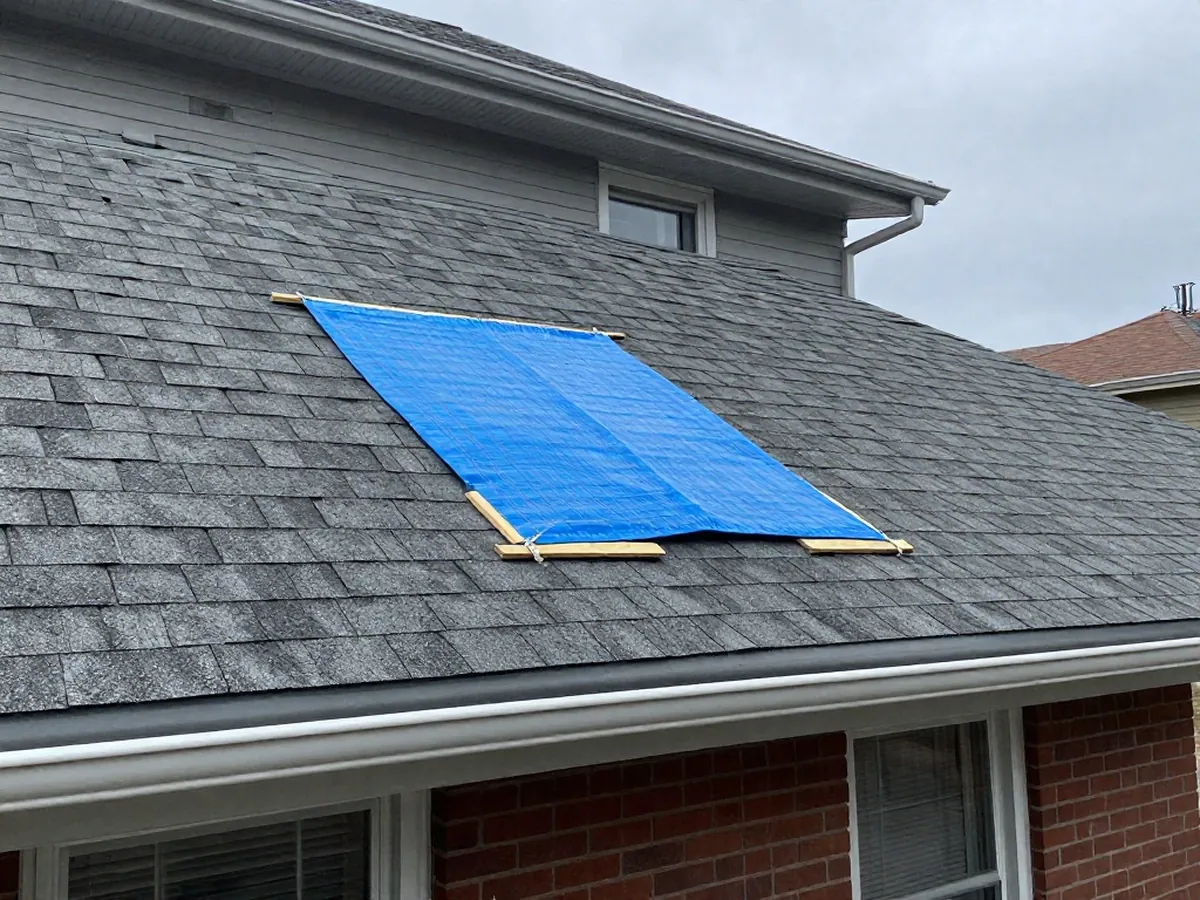
Looks from the ground
Each of these looks is made from the ground or at a window. A ladder, a wet slope or a steep pitch belongs to the roofer.
- Start on the ground, where binoculars and an upstairs window reveal a lot. After Sandy, the asphalt roofing trade group suggested exactly that, with everyone staying off the ladder until a roofer has looked.
- Photograph everything before moving or discarding anything: the lawn, each slope from below and the ceilings inside.
- Walk the property for limbs leaning on the roof edge. Note them, and leave them alone if a wire is anywhere nearby.
- Keep receipts for tarps, boards and cleanup. The state insurance department asks claimants to hold on to them.
Leave it and make the safety call if
- A wire has dropped, hangs slack or is tangled in a limb: consider it energized, keep well away, and call 911 or the PSE&G emergency line, 1-800-436-7734.
- A tree or heavy limb has come down on the house: get out of the rooms below it, and call 911 if the roof looks ready to collapse.
- Water streams down from the ceiling or from a light: close off that room, and phone 911 the moment anything sparks or smells scorched.
- A tarp has blown loose in wind or on a wet roof: do not climb up to chase it. Tarps are a roofer's job; call 911 only if someone is hurt.
After the wind drops: one to ten
- 8 to 10
a wire is on the ground, a tree sits on the house, or water drips from a light fixture. Leave the area and use 911 or PSE&G, never the roof, as the first phone call. Dial (551) 209-3947 later, from a safe spot, to ask about the roof.
- 4 to 7
missing shingles, bent metal or a fresh stain, with the house otherwise safe. Photograph from the ground, collect receipts for anything bought to keep water out, and call (551) 209-3947 while the weather is still fresh in everyone's memory.
- 1 to 3
a loose gutter or a few shingles in the grass. Make the ground-level checks above and call if a stain turns up after the next rain.
Three questions about this job
What does the state tell people to do first after storm damage?
Is a tarp the same thing as a repair?
How can homeowners size up offers that arrive after a storm?
Signs this is the job
- Shingles or pieces of ridge cap scattered across the yard
- A limb, or a whole branch, lying on a slope or against the gutter
- A gutter pulled away from the fascia, or a downspout knocked loose
- New ceiling stains after a night of heavy rain and wind
- Metal flashing bent up at a chimney, a vent or a dormer wall
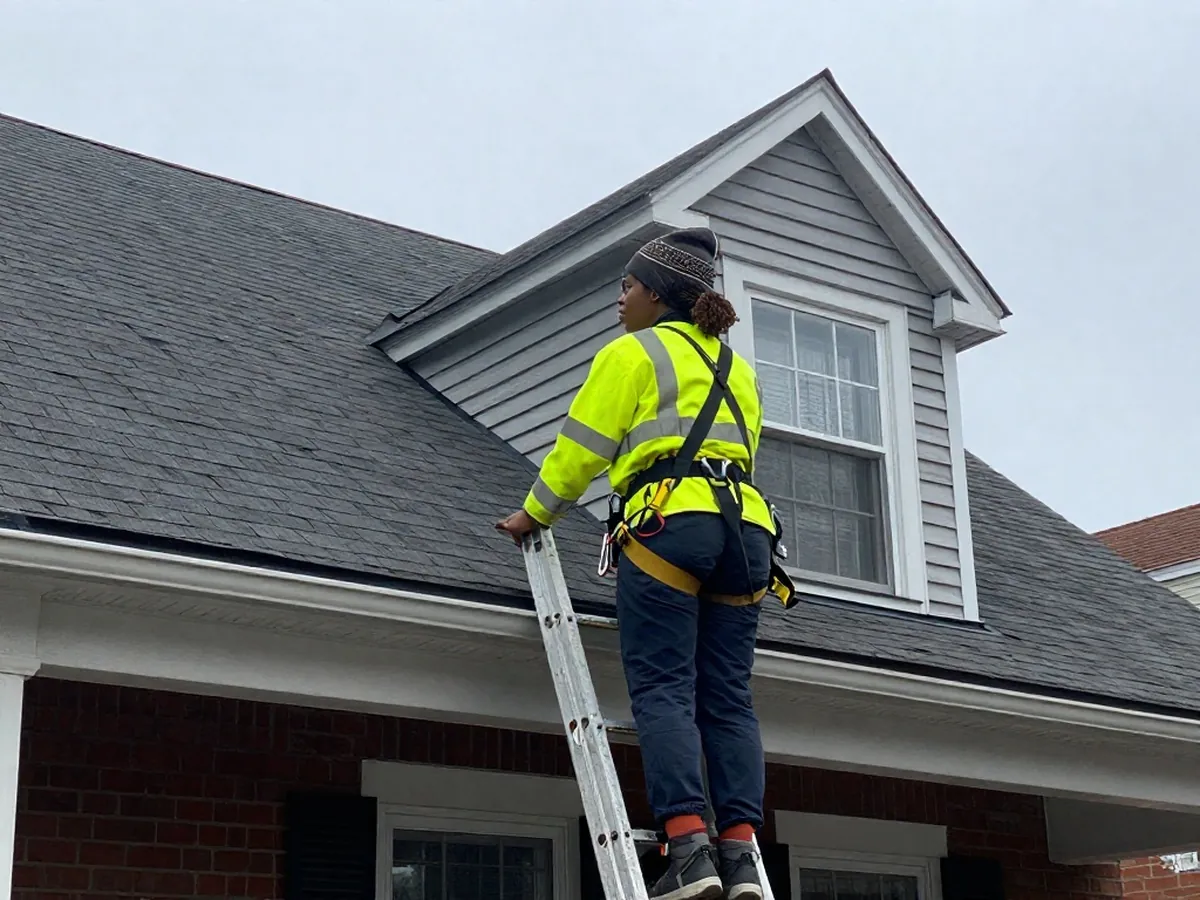
Tarp now, decide later
A tarp is a stopgap. The Energy Department's roof brief and the state's insurance guidance agree on the order of events: keep further water out, document the damage, then look at what the roof needs. Most storm jobs end up on the repair side, with a patch of shingles, a run of flashing or a gutter put back where it belongs.
When the damage spreads across several slopes, or the roof was already near the end of its life, the conversation turns toward roof replacement. Neither answer has to be reached on the phone.
Other jobs on the list
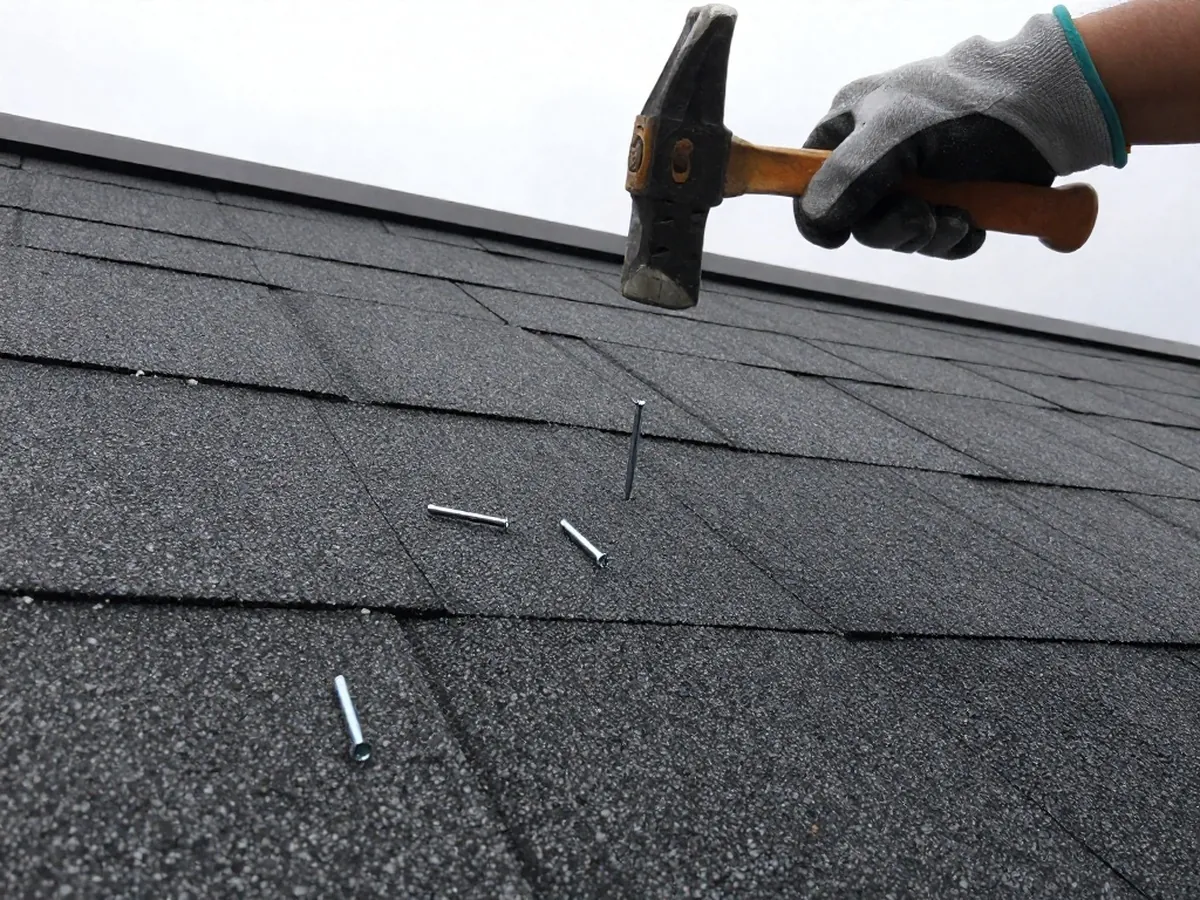
Stains, loose shingles and wind damage in Lyndhurst
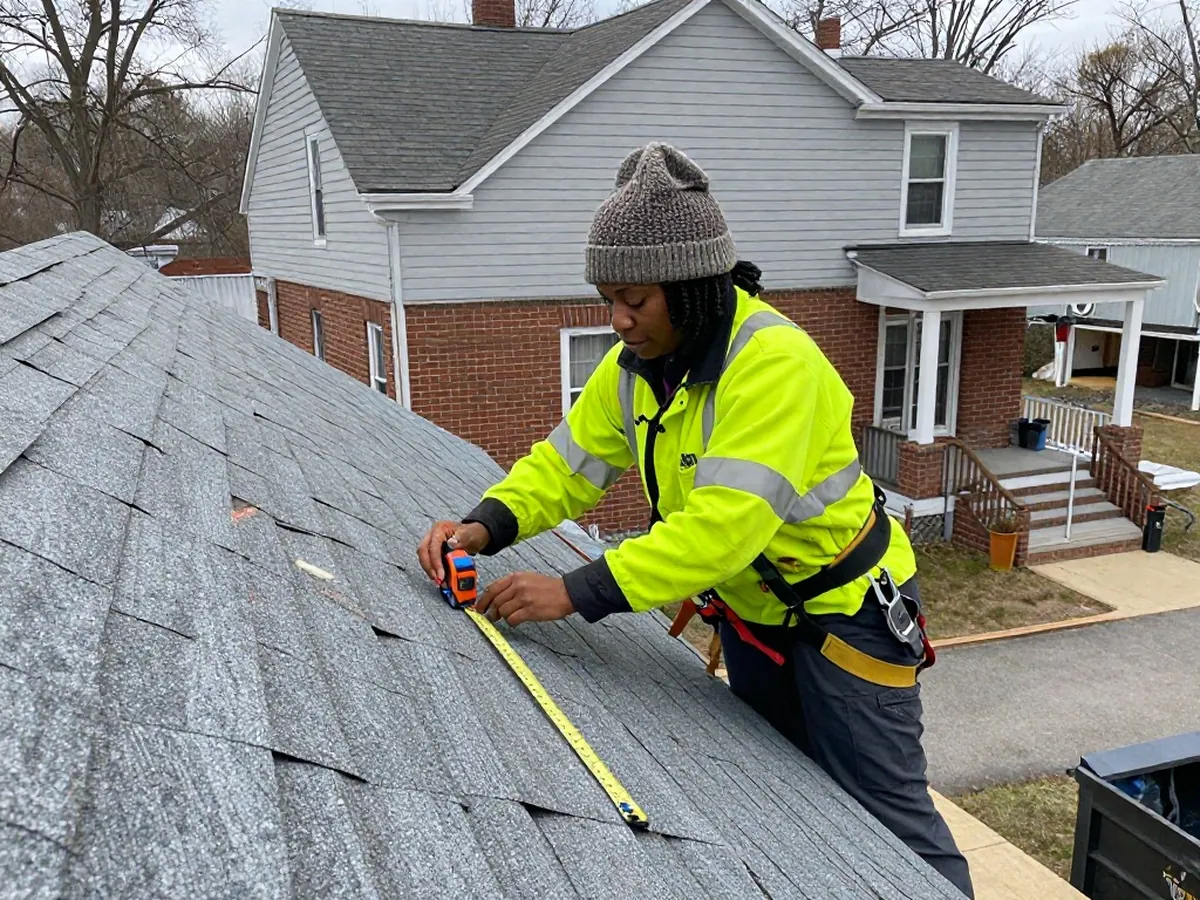
A full roof covering, start to finish, near Lyndhurst
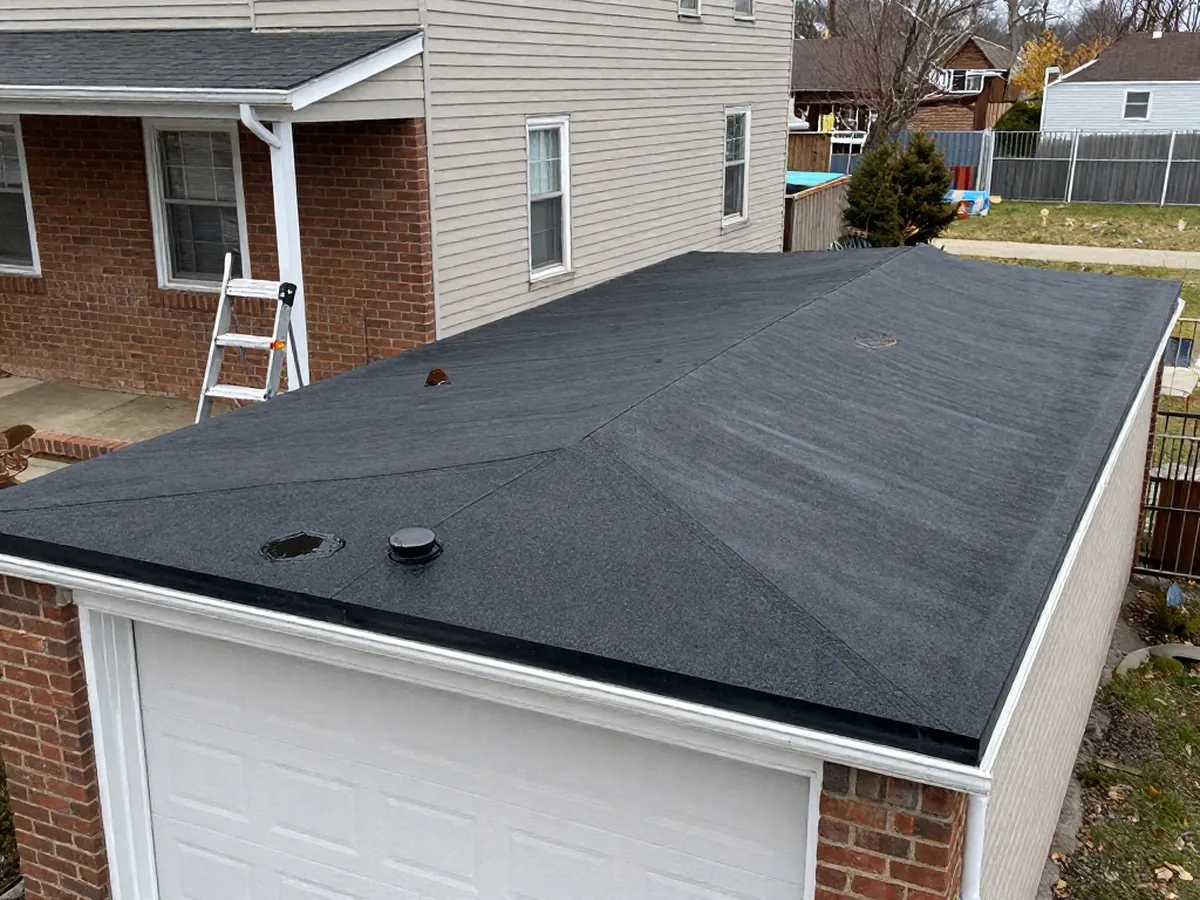
Garages, porches and rear additions with a low-slope top
From
- Asphalt Roofing Manufacturers Association, Assessing roof damage after Superstorm Sandy (7 Nov 2012)
- NJ Department of Banking and Insurance, Guidance on filing insurance claims for storm-related damage
- PSE&G, Downed Power Line Safety
- U.S. Department of Energy, Repairing Roofs and Ceilings technical brief (Jan 2006)
- New Jersey Weather and Climate Network, Remnants of Ida strike New Jersey
- New Jersey Weather and Climate Network, The Beat Goes On: August 2020 and Summer Recaps (7 Sep 2020)
- Bergen County, 2026 Hazard Mitigation Plan, Section 4 Risk Assessment (Table 4.6-1)
Checked 1 Nov 2026