Sandy, Isaias and Ida on the record
Storm season on Lyndhurst roofs: three storms and what they left
Three named storms since 2012 shaped how roofs around Lyndhurst are talked about. What follows keeps to the figures the weather network, the county and the state published, and to the order of steps those sources suggest afterward.
Ida, hour by hour at one gauge
The New Jersey Weather and Climate Network's table of peak one-hour rainfall for 1 and 2 September 2021 lists Lyndhurst at 3.58 inches, ending at 9:30 p.m., with a 500-year return period. Newark Airport logged 3.65 inches in its worst hour, a 1,000-year figure by the same table.
Storm totals ran 9.02 inches at North Arlington, 8.72 at Harrison, 8.44 at Newark Airport and 8.39 at Maplewood. A roof that stayed dry through that night did well; one that leaked is worth a second look after the next steady rain.
Sandy and the Hackensack
Bergen County's 2026 hazard plan names portions of Lyndhurst among the areas affected by coastal flooding from Hackensack River surge. It also records that Sandy's surge on 29 October 2012 overtopped levees in Moonachie, Little Ferry and Carlstadt, where four to five feet of water stood. The Meadowlands Commission's Lyndhurst map labels the Sachs Creek, Rutherford and East Rutherford tide gates.
That map is dated October 2011, rests on 2009 ground-level data and says it is for reference and does not replace FEMA's maps.
Isaias, and the days without power
On 4 August 2020, Tropical Storm Isaias took power from more than a million New Jersey customers, some for upward of five days, according to the weather network's summer recap. The recap says countless trees came down, crushing vehicles and buildings and pulling down lines, and it reports a single cleanup death involving a live power line.
Those are statewide figures; the recap gives no breakdown for Bergen County.
The hour after the wind drops
Start with the wires. PSE&G's safety page tells people to treat a fallen line as live, to report it to PSE&G at its emergency number, 1-800-436-7734, or to 911, and to keep away from trees caught in lines. Then photograph the damage before moving anything, as the state insurance department advises, and study the roof from ground level or an upstairs window, as the roofing trade group advised after Sandy.
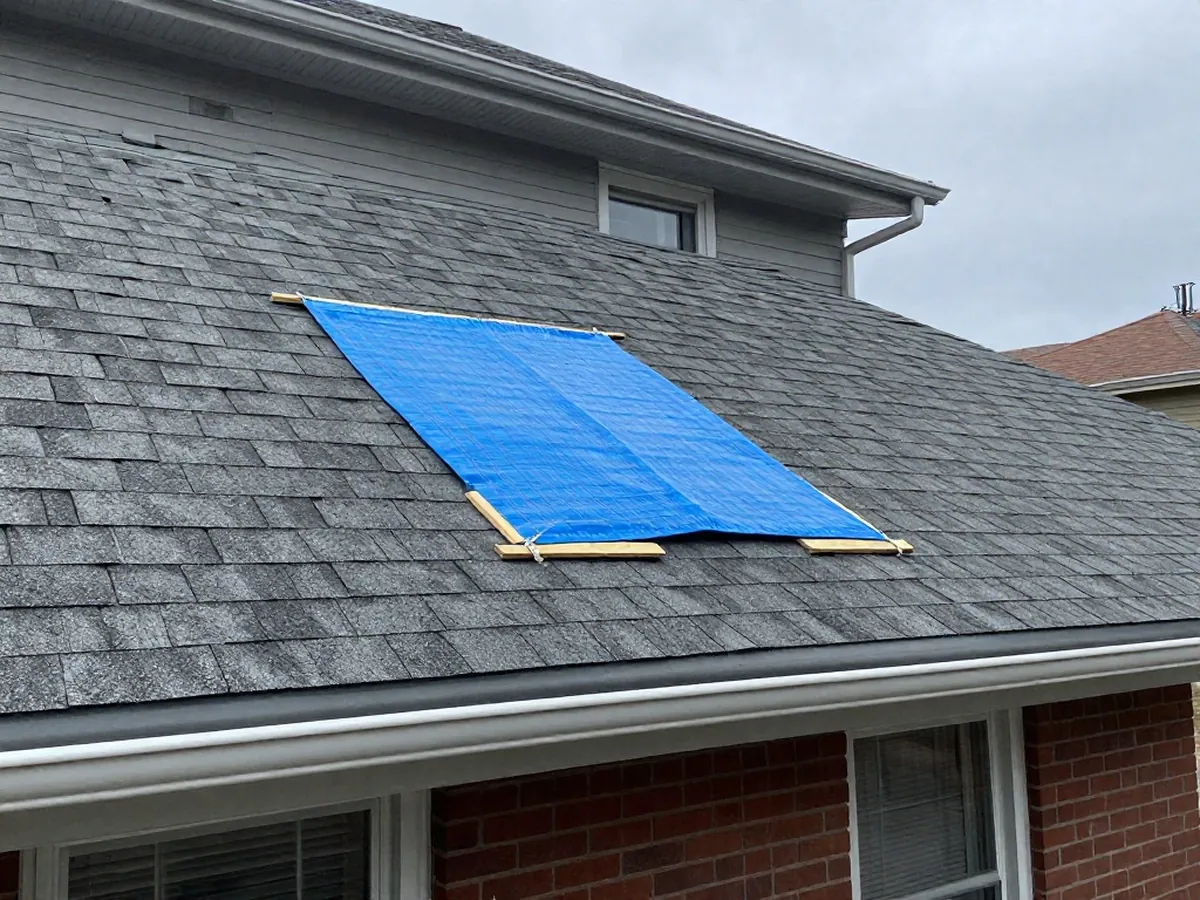
Temporary repairs that keep water out are fine, and the receipts go in the claim folder. The roof itself is a roofer's job.
From
- PSE&G, Downed Power Line Safety
- NJ Department of Banking and Insurance, Guidance on filing insurance claims for storm-related damage
- Asphalt Roofing Manufacturers Association, Assessing roof damage after Superstorm Sandy (7 Nov 2012)
- U.S. Department of Energy, Repairing Roofs and Ceilings technical brief (Jan 2006)
Wind, water and the policy
The state insurance department notes that flood damage is generally excluded from standard policies and that a new flood policy does not start until 30 days after purchase. Whether wind damage to a roof is covered is a matter between the owner and the insurer.
The department also notes that the homeowner picks the contractor, whoever the insurer suggests.
Checked 1 Nov 2026